The Cost of Perimenopause and Menopause in the Workplace and What HR Needs to Know
Most companies have clear strategies for parental leave, mental health, burnout and leadership development. What is often missing is support for perimenopause and menopause, even though this transition affects millions of women during the years when they hold senior roles, manage high performing teams and influence organizational outcomes.
As a former corporate finance leader, I know how expensive turnover and disengagement can be. When I later experienced my own perimenopause symptoms and eventually left my corporate career, I became proof of how real this issue is for companies. That experience is what drives my work today as a corporate menopause educator.
Perimenopause is the stage where confusion often starts. Many women do not know their symptoms are hormonal or that they can begin as early as the mid-thirties. They are frequently misdiagnosed or dismissed. Or they self-diagnose their symptoms as burnout. This is partly because most medical training programs include only one to two hours of menopause education. The knowledge gap affects women and the organizations that depend on them.
The Financial Impact on Employers
This is not only a wellbeing concern. There are measurable financial costs linked to unmanaged perimenopause and menopause symptoms.
The Mayo Clinic estimates that menopause-related symptoms contribute to approximately 1.8 billion dollars in lost work time every year in the United States. When indirect costs and medical spending are included, the total rises to 26.6 billion dollars each year.
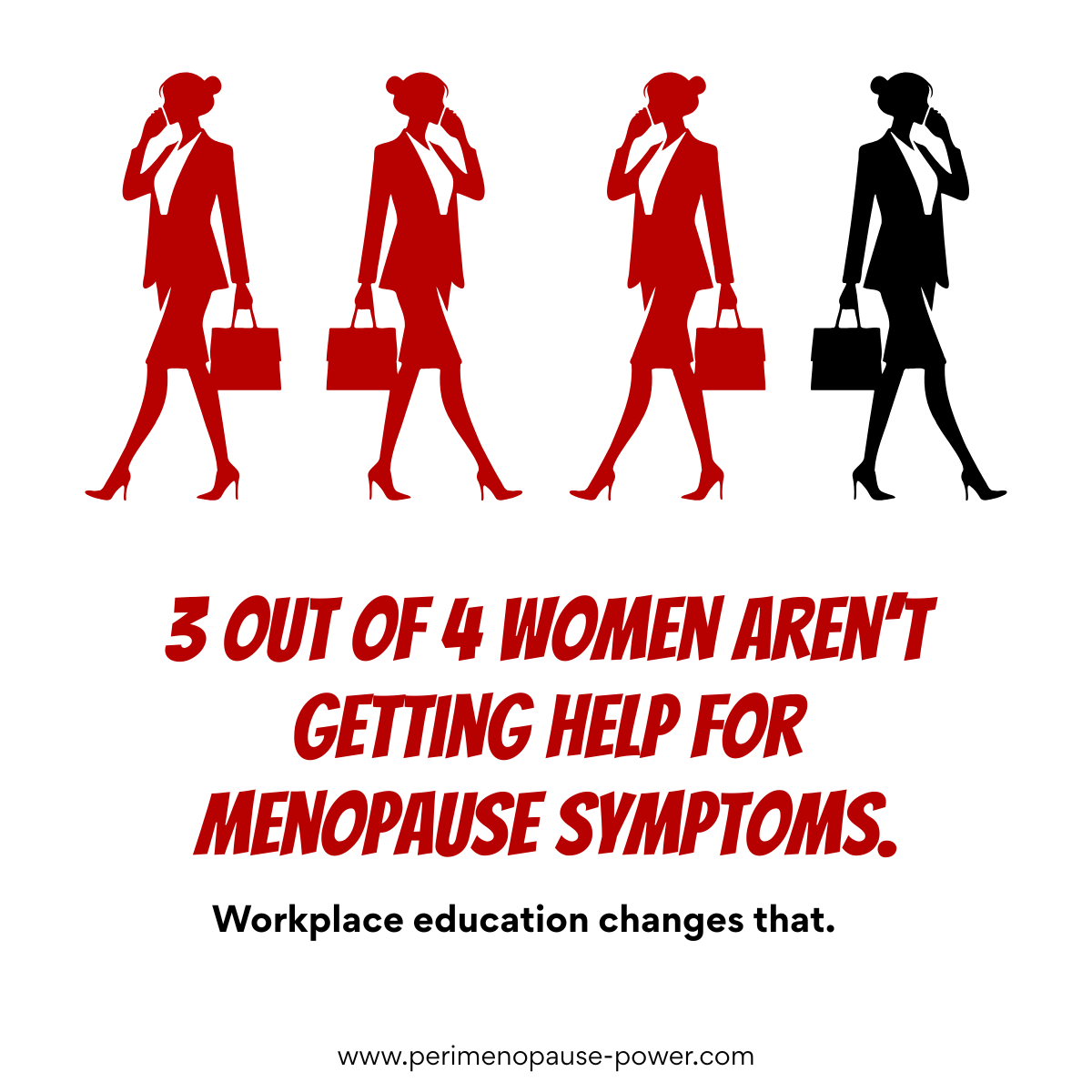
AARP reports that 90 percent of women over age 35 experience symptoms, yet 38 percent say their workplace does not address the topic at all.
Turnover magnifies these costs. Forbes estimates that replacing a mid-level employee costs roughly 33 percent of their annual salary. For executives and specialized positions, several analyses place the replacement cost between 50 and 400 percent of salary due to lost expertise, onboarding time and operational disruption.
A global survey by the Korn Ferry Institute and Vira Health found that 47 percent of working women said symptoms disrupted their performance and 40 percent experienced six or more symptoms that affected their effectiveness. Most concerning, 13 percent of women said they had left a job because of symptoms and 15 percent said they were considering it. In total, more than one quarter of working women are at risk of stepping back or stepping out during this transition.
These numbers show a significant workforce and leadership pipeline risk.
Why Perimenopause Must Be Included in Workplace Strategy
Perimenopause typically begins in the late thirties or forties and can last four to ten years. Symptoms may include:
Brain fog
Difficulty sleeping
Low energy
Mood shifts
Trouble concentrating
Irregular periods
Joint discomfort
Many women assume they are burning out when they are actually navigating hormonal changes that can be managed with the right education and support.
Organizations have a major opportunity to intervene early. Awareness and simple adjustments can prevent the progression from confusion to performance concerns to resignation.
Practical Steps HR Can Take Now
The most effective solutions are straightforward and significantly less costly than losing experienced talent.
1. Increase Education for Employees and Managers
Knowledge reduces stigma and leads to earlier support.
Examples include:
Internal webinars or lunch and learns
Manager education to help them recognize when support may help
A resource hub with vetted information
Access to a menopause specialist or corporate educator
ROI: Better communication, fewer misunderstandings and earlier intervention.
2. Offer Flexible and Supportive Adjustments
Small accommodations can make a meaningful difference in productivity.
Examples include:
Flexible start times
Remote or hybrid work options
Access to temperature control or desk fans
Quiet spaces when symptoms flare
ROI: Reduced absenteeism and stronger retention.
3. Strengthen Healthcare Benefits
Review coverage to ensure women have access to evidence-based care.
Examples include:
Evaluations for perimenopause and menopause
Hormone therapy when clinically appropriate
Mental health support
Partnerships with menopause focused telehealth providers
ROI: Faster relief, lower long-term costs and fewer repeated visits for unresolved symptoms.
4. Build a Supportive and Inclusive Culture
Normalizing this stage improves engagement and morale.
Examples include:
Leadership acknowledgment
Employee resource groups
Clear communication that this transition is real and valid
Integration into DEI and wellness strategies
ROI: Higher engagement among experienced talent.
5. Use Menopause Support as a Talent and Retention Strategy
Companies that support women throughout their entire career lifecycle stand out. Midlife women bring leadership experience, stability and institutional knowledge. When they feel understood and supported, they stay and they lead.
ROI: Stronger pipelines, better retention and reduced turnover at critical levels.
The ROI of Corporate Menopause training
Investing in perimenopause and menopause education supports:
Lower turnover
Fewer missed workdays
Higher productivity
More stable leadership
Lower healthcare spending
Improved morale and engagement
A stronger employer brand that attracts top talent
Supporting women through this transition does more than reduce risk and attrition. It strengthens organizational performance and protects long-term results.
A Final Thought
Perimenopause and menopause will touch every woman at some point and a significant portion of the workforce during key career years. When organizations ignore this life stage, they absorb the cost. When they support it, they strengthen culture, talent retention and overall performance.
Replacing even one senior leader can cost an organization far more than the investment required for corporate menopause education, which means the training often pays for itself through a single retained employee. If your organization is evaluating menopause education or exploring how to support midlife women more effectively, I would be glad to talk with you about bringing this work to your team.
Visit www.perimenopause-power.com to learn more about our corporate menopause training options.